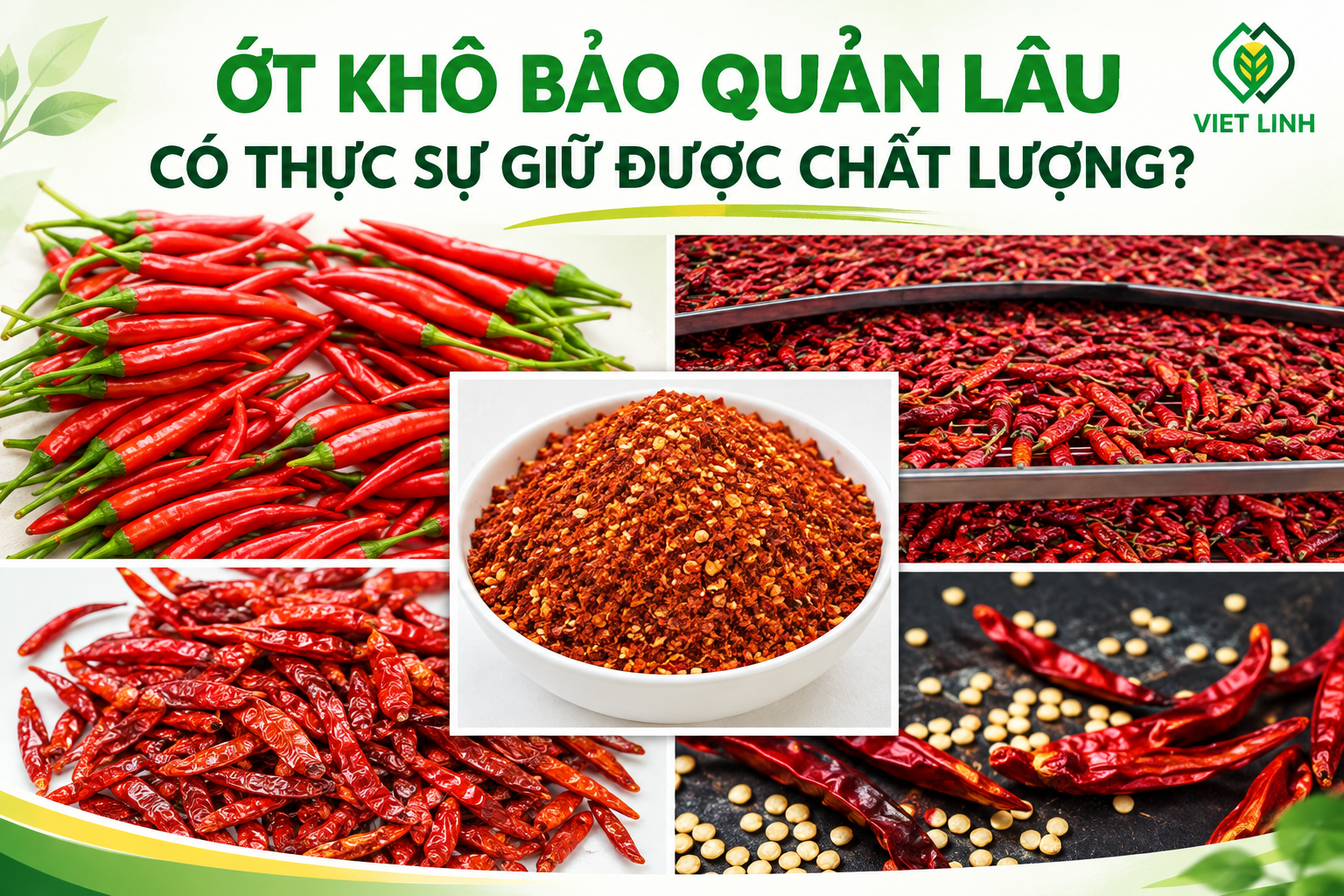
CAN DRIED CHILI PEPPERS MAINTAIN THEIR QUALITY DURING LONG-TERM STORAGE?
For large-volume dried chili orders, quality at the time of shipment is not the only factor to consider. From packaging and sea freight to warehouse storage and processing, product quality can still change if moisture levels, packaging, or storage conditions are unsuitable.
Therefore, when importing dried chili peppers, businesses should evaluate not only the initial product sample but also the product’s ability to maintain quality throughout transportation and storage.
Moisture Content Directly Affects Storage Stability
Dried chili peppers can still absorb moisture from the surrounding environment. When moisture levels remain elevated for an extended period, the product may undergo changes in surface condition, color, and aroma, while the risk of mold growth and quality deterioration may also increase.
For shipments transported over long distances or stored in hot and humid conditions, moisture control should be established from the outset. Even a shipment that meets specifications when leaving the factory may encounter problems upon arrival at the buyer’s warehouse if exposed to unsuitable environmental conditions for an extended period.
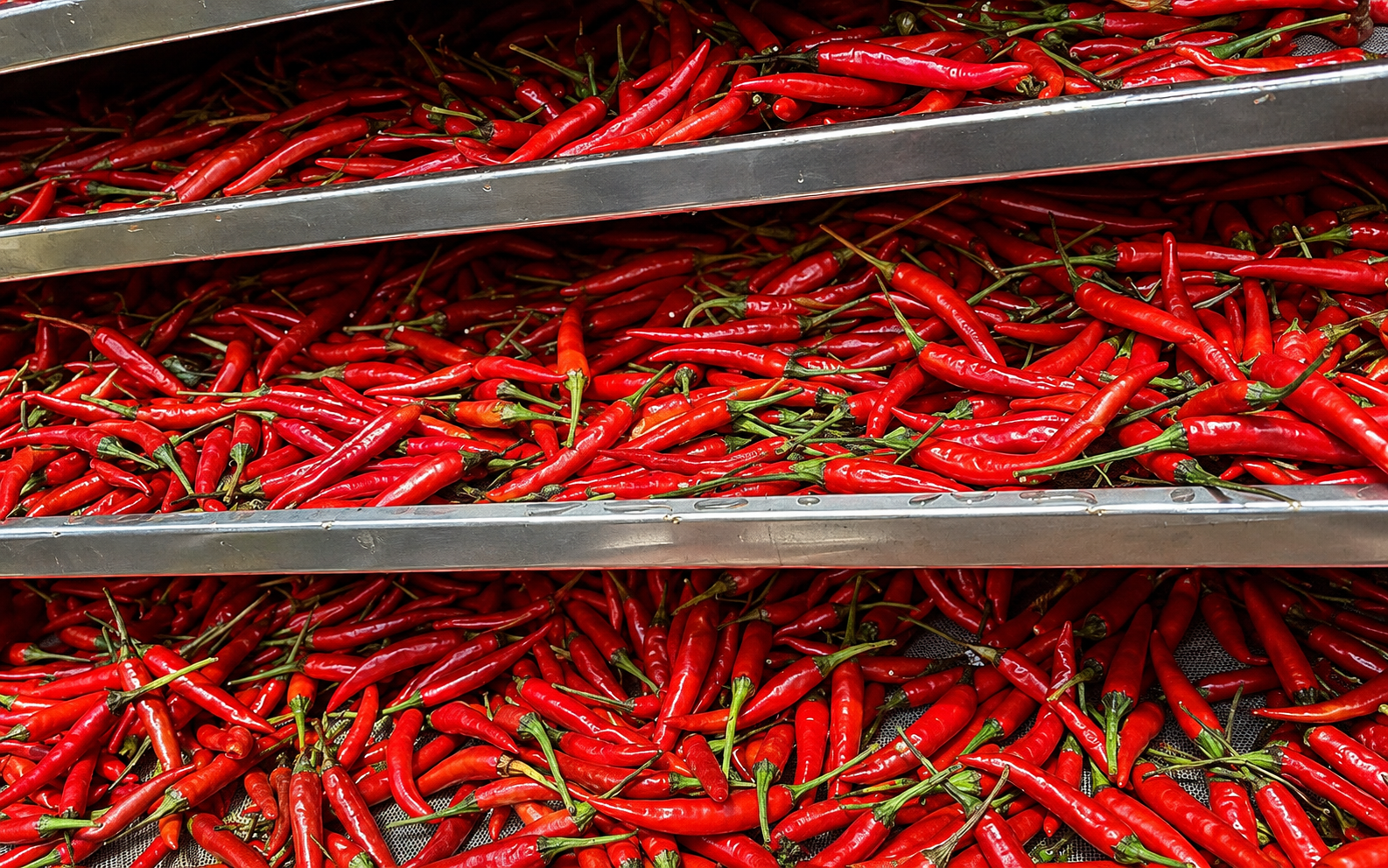
Moisture is also related to food safety requirements. EU regulations set maximum levels for aflatoxin B1 at 5 µg/kg and total aflatoxins at 10 µg/kg for dried Capsicum products, including whole dried chili peppers and crushed or ground chili products. Therefore, export chili quality should be verified through appropriate testing rather than sensory evaluation alone.
Packaging Helps Maintain Quality Throughout Transportation
For dried products, packaging is more than a means of containing goods; it also helps reduce environmental exposure during transportation and storage.
If the packaging material or inner liner is unsuitable, the product may be affected by external moisture, particularly during long sea voyages or storage in areas with high humidity. When requesting quotations, buyers should therefore confirm packaging specifications, packaging materials, inner liners, and recommended storage conditions together.
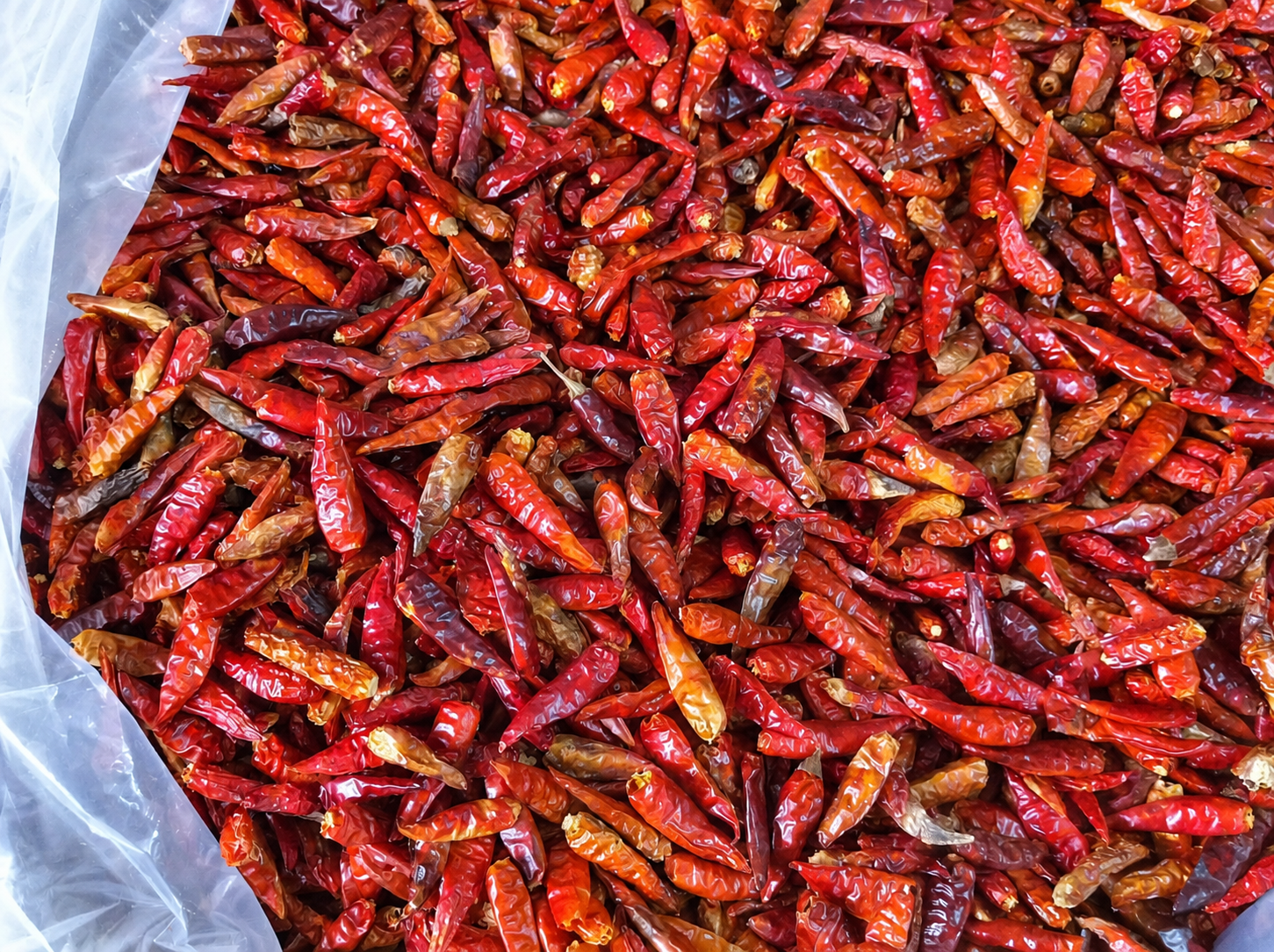
This is also why prices can vary between orders of the same chili variety. Pricing depends not only on the raw material but also on quality requirements, packaging specifications, and associated quality control standards.
Quality Is More Than Just External Appearance
For food processing plants and spice manufacturers, dried chili peppers must meet requirements for both appearance and raw material quality. Color, characteristic aroma, uniformity, surface condition, and foreign matter content can all affect processing performance and finished product quality.
For chili peppers intended for grinding or chili powder production, importers should pay particular attention to consistent quality across multiple shipments rather than relying on a single initial sample.
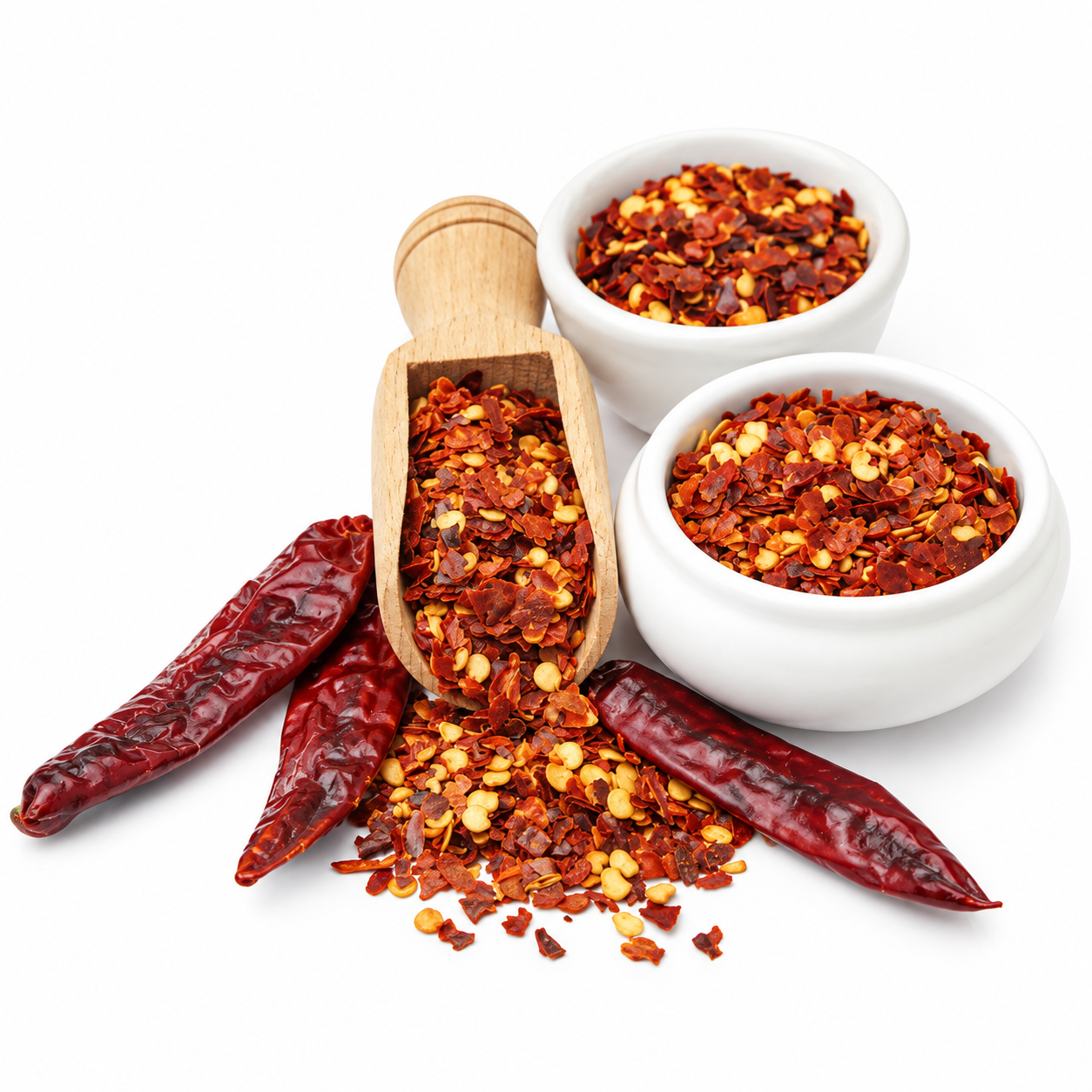
In addition, parameters relating to foreign matter, mold, insects, pesticide residues, microbiological contamination, and mycotoxins should be controlled according to processing requirements and the regulations of the importing market.
Key Specifications to Agree on Before Importing
For large-volume dried chili orders, agreeing on specifications from the outset helps importers reduce risks when receiving goods. Requirements should be based on the intended processing application and regulations in the destination market, particularly those relating to food safety.
For example, in the EU, the maximum level for ochratoxin A in dried chili peppers and chili powder under the dried Capsicum category is set at 20 µg/kg.
In addition to the unit price, importers should clearly confirm the applicable standards, test results, packaging specifications, and quality documentation before placing an order. These specific agreements give both parties a common basis for evaluation and reduce the risk of shipments failing to meet the agreed requirements.
Viet Linh Agrimex: Dried Chili Supply for B2B Orders
For large orders, a supplier’s capability is not measured solely by product availability. It also depends on the ability to maintain consistent quality, meet specifications, and organize supply according to the requirements of each order.
Viet Linh Agrimex supplies dried chili peppers and processed chili products from Vietnam to B2B customers. For each order, requirements concerning variety, product form, quality, packaging specifications, and quality control criteria can be agreed upon before quotation and production.
Viet Linh can also discuss specifications based on the intended application and requirements of each market, rather than applying a single specification to every customer. This helps importers maintain a stable long-term supply, achieve consistent quality across shipments, and develop long-term import plans.
Looking for Vietnamese dried chili supply for a large-volume order? Contact Viet Linh Agrimex to discuss your product requirements and receive a suitable quotation.