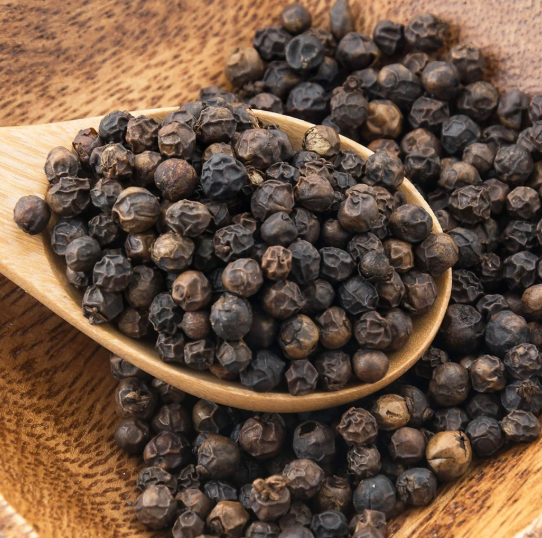
Vietnam Pepper Exports Show Strong Recovery: Opportunities from Rising Demand, Challenges from Intensifying Competition
Positive signals are returning to Vietnam’s pepper industry in the early months of 2026, as both export volume and export value have recorded solid growth. However, behind this recovery lies a series of challenges, requiring the sector to continue restructuring toward sustainable development.
-1200x676-4.jpg)
According to data from the Vietnam Customs Department, during the first 15 days of March 2026, Vietnam exported 12,613 tons of pepper, generating USD 81 million in export revenue. This represents a sharp increase of 46.7% in volume and 35.4% in value compared to the same period in 2025.
Cumulatively, from the beginning of the year to March 15, 2026, Vietnam’s pepper exports reached 48,192 tons, earning USD 312.23 million, up 34.6% in volume and 28% in export turnover year-on-year.
Notably, with export revenue exceeding USD 312 million for nearly 48,200 tons, the average export price is estimated at around USD 6,480 per ton, remaining at a high level compared to previous years. This is an encouraging sign, especially considering that the global pepper market has experienced prolonged oversupply and steep price declines in past cycles.
Global Demand Recovery Drives Vietnam Pepper Export Growth
Overall, Vietnam’s pepper export activities are showing a clear recovery from the start of 2026, reflecting improving global consumption demand. Key markets such as the United States, the European Union (EU), and the Middle East have resumed increasing imports as inventories gradually decline after a long period of reduced purchasing.
According to Mr. Nguyen Quang Binh, a coffee market research expert, the strong increase in export volume during the early months of the year indicates that Vietnamese exporters have quickly seized market opportunities while prices remain high. This period marks the return of importers who are rebuilding stockpiles, creating favorable demand conditions for Vietnamese pepper.
Industry Restructuring and Sustainable Production Support Recovery
Beyond market factors, the recovery is also driven by internal changes within Vietnam’s pepper sector. In recent years, pepper cultivation areas have been better controlled, and production has gradually shifted toward sustainable farming practices, reducing the “boom-and-bust” expansion seen in previous periods.
In particular, the trend toward deep processing investment is beginning to deliver positive results. Many companies have expanded production of ground pepper, white pepper, organic pepper, and other value-added products, enhancing export value and meeting stricter requirements from high-end markets.
Mr. Phan Minh Thong, Chairman of Phuc Sinh Corporation, stated that while Vietnam previously relied heavily on exporting raw pepper, the share of processed pepper products has increased significantly. This transformation not only improves selling prices but also reduces dependence on volatile raw material markets.
Competition Pressure Remains a Major Challenge
Despite the positive growth, one key issue is that export volume growth is still outpacing export turnover growth. This suggests that export prices have not risen proportionally, highlighting the ongoing competitive pressure in the global market.
Experts note that this development is not surprising as global pepper supply is showing signs of recovery. Brazil and Indonesia, two major competitors of Vietnam, are entering new production cycles and may increase their export volumes in the coming months.
Additionally, factors such as logistics costs, exchange rate fluctuations, and rising trade protectionism in certain importing countries are placing further pressure on Vietnamese exporters.
Although orders are improving, buyers remain cautious during price negotiations. They closely monitor market trends and only accept reasonable price levels, unlike previous periods when aggressive purchasing was common. Moreover, increasingly strict requirements regarding quality control, traceability, and sustainability standards are forcing exporters to raise investment costs—from raw material areas to processing facilities, Mr. Thong added.
Vietnam Pepper Industry Must Focus on Value, Not Volume
In this context, experts emphasize that Vietnam’s pepper industry must remain committed to a strategy of enhancing value rather than pursuing export volume alone. Maintaining an average export price above USD 6,000 per ton presents a strong opportunity for Vietnam to restructure the sector toward greater efficiency and higher competitiveness.

Mr. Nguyen Quang Binh also pointed out that Vietnam still has significant growth potential if it effectively leverages Free Trade Agreements (FTAs) and expands into new markets. The key lies in improving product quality, meeting international standards, and building a stronger global brand for Vietnamese pepper.
From the business perspective, many exporters are increasing investment in advanced processing technology, developing new product lines, and diversifying export destinations to reduce risks and stabilize growth.
Outlook: Opportunities with Risks Ahead
However, to ensure sustainable long-term growth, Vietnam’s pepper industry must closely monitor factors such as global price fluctuations, supply trends from major producing countries, and changes in trade policies in key importing markets.
Overall, Vietnam’s pepper export outlook in early 2026 is showing promising signs of recovery, but it also presents significant challenges. Effectively seizing market opportunities while strengthening competitiveness will be the key for Vietnam’s pepper sector to maintain its momentum and achieve sustainable development in the coming period.