BULK STORAGE AND TRANSPORTATION OF FRESH GINGER: INSPECTION STANDARDS, PACKAGING, AND LOSS REDUCTION
For large-volume fresh ginger orders, product quality can change significantly during transportation. Even if the ginger meets the required standards at the export warehouse, it may still be at risk of mold, shriveling, sprouting, or physical damage if temperature, humidity, and ventilation are not properly controlled during post-harvest handling, packaging, and storage. These issues can lead to product losses and quality disputes between suppliers, importers, and distributors. Therefore, all parties should agree in advance on storage specifications, transportation arrangements, and product inspection criteria.
This article summarizes the key risk factors affecting ginger storage and bulk ginger transportation, common shipping methods, packaging and inspection practices, and how to select ginger for effective long-term storage. The technical parameters presented are general guidelines; the specific requirements for each shipment should be agreed upon based on the destination market and intended application.
Why Is Fresh Ginger Sensitive During Storage and Transportation?
Fresh ginger continues to respire and lose moisture after harvest. Due to its high water content and relatively thin skin, ginger is susceptible to temperature, humidity, ventilation, and storage duration. If storage conditions are unsuitable, the quality of the rhizomes may deteriorate in several ways:
-
Moisture loss and shriveling: High temperatures or excessively dry environments cause ginger to lose moisture, resulting in wrinkled skin and reduced weight.
-
Mold and decay: Rhizomes that are scratched, still wet, or exposed to standing water are more susceptible to spoilage.
-
Sprouting: Extended storage under unsuitable conditions may encourage sprout development.
-
Temperature-related damage: Excessively high temperatures accelerate deterioration, while temperatures that are too low may cause chilling injury.
Therefore, before selecting a transportation method, businesses should determine the time from harvest to delivery, the expected storage period, and the storage conditions available at the destination.
Bulk Storage Specifications for Fresh Ginger
For whole fresh ginger rhizomes, temperature and humidity must be controlled simultaneously. Some post-harvest storage guidelines recommend maintaining a temperature of approximately 12–14°C and relative humidity of 85–90% during transportation. Ginger is also sensitive to excessively low temperatures, so colder storage should not automatically be considered better.
During storage, importers should pay attention to the following:
-
Temperature control: Maintain stable conditions, avoid sudden temperature fluctuations, and prevent ginger from being exposed to excessively low temperatures.
-
Maintain appropriate humidity: Avoid excessively dry environments that cause moisture loss, while also preventing standing water and surface condensation.
-
Ensure adequate ventilation: Arrange the goods with sufficient space for air circulation. Avoid stacking them too high or compressing the packaging.
-
Sort the products: Separate bruised, rotten, moldy, or otherwise damaged rhizomes to prevent them from affecting healthy ones.
-
Conduct regular inspections: Monitor temperature, packaging conditions, and the surface of the rhizomes throughout the storage period.
For shipments requiring long-term storage, actual conditions should be determined according to the ginger variety, post-harvest handling condition, and expected storage duration. A single fixed temperature or humidity level should not be applied to every shipment.

How to Select Ginger for Effective Long-Term Storage
Effective ginger storage starts with selecting the right raw materials:
-
Appropriate maturity: Fully mature rhizomes with firm skin generally withstand storage and transportation better than immature ginger.
-
Ginger variety: Different varieties have distinct characteristics in terms of rhizome size, fiber content, and flavor. Read more: Common Ginger Varieties in Vietnam: Local Small Ginger, Hybrid Small Ginger, and Large Ginger to choose a variety suitable for your intended application.
-
Appearance: Rhizomes should be intact, without decay, mold, or unusual odors. Bruised, pest-damaged, or severely injured rhizomes should be rejected.
-
Cleanliness and surface condition: Soil, secondary roots, and foreign matter should be handled according to the requirements. If the ginger has been washed, its surface should be adequately drained and dried before packaging.
-
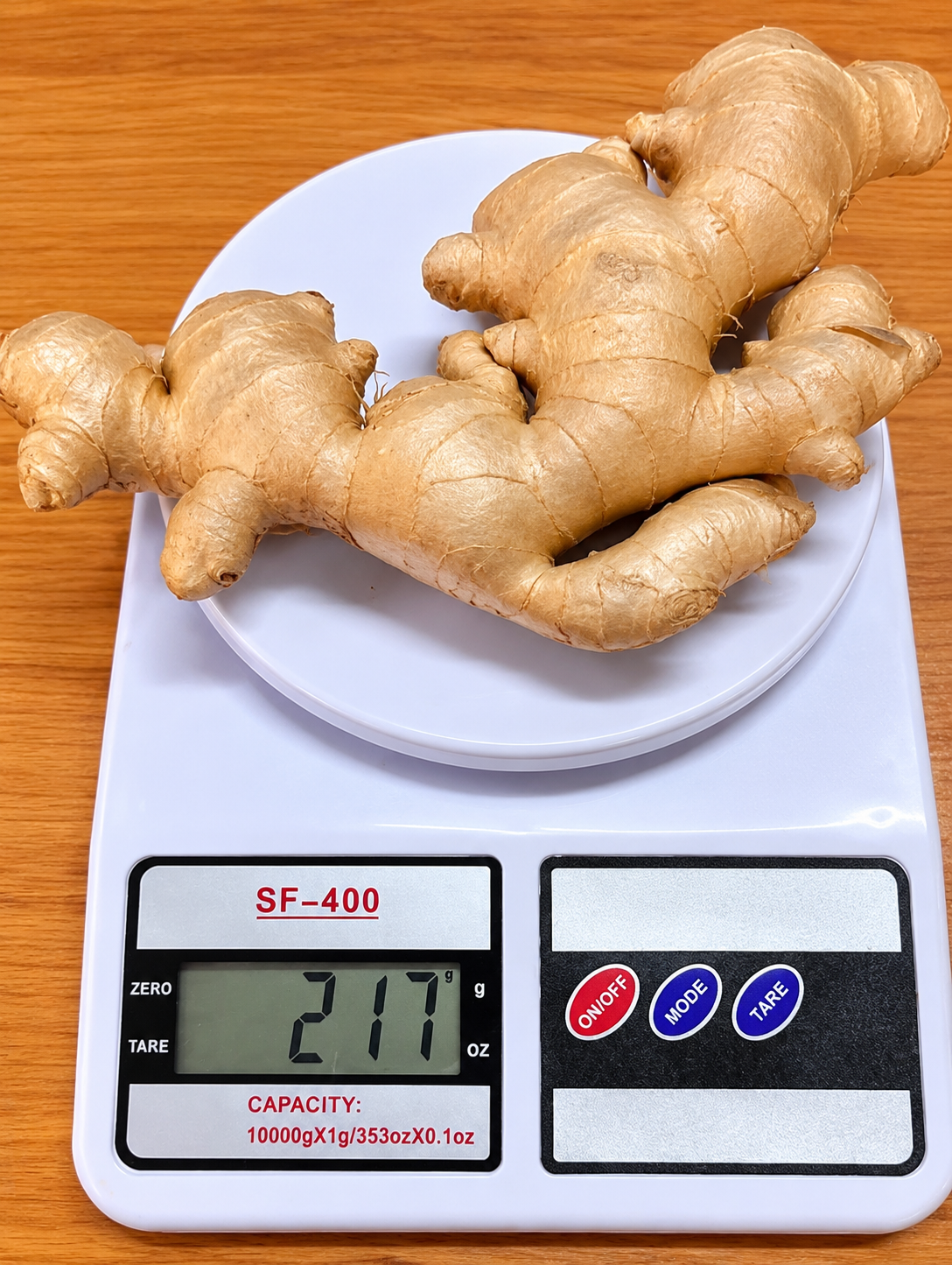
Size and uniformity: Rhizomes within the same package should be relatively consistent in size and quality.
-
Time after harvest: The time from harvesting to processing and packaging should be minimized to reduce quality deterioration.

Packaging Specifications for Fresh Ginger During Long-Distance Transportation
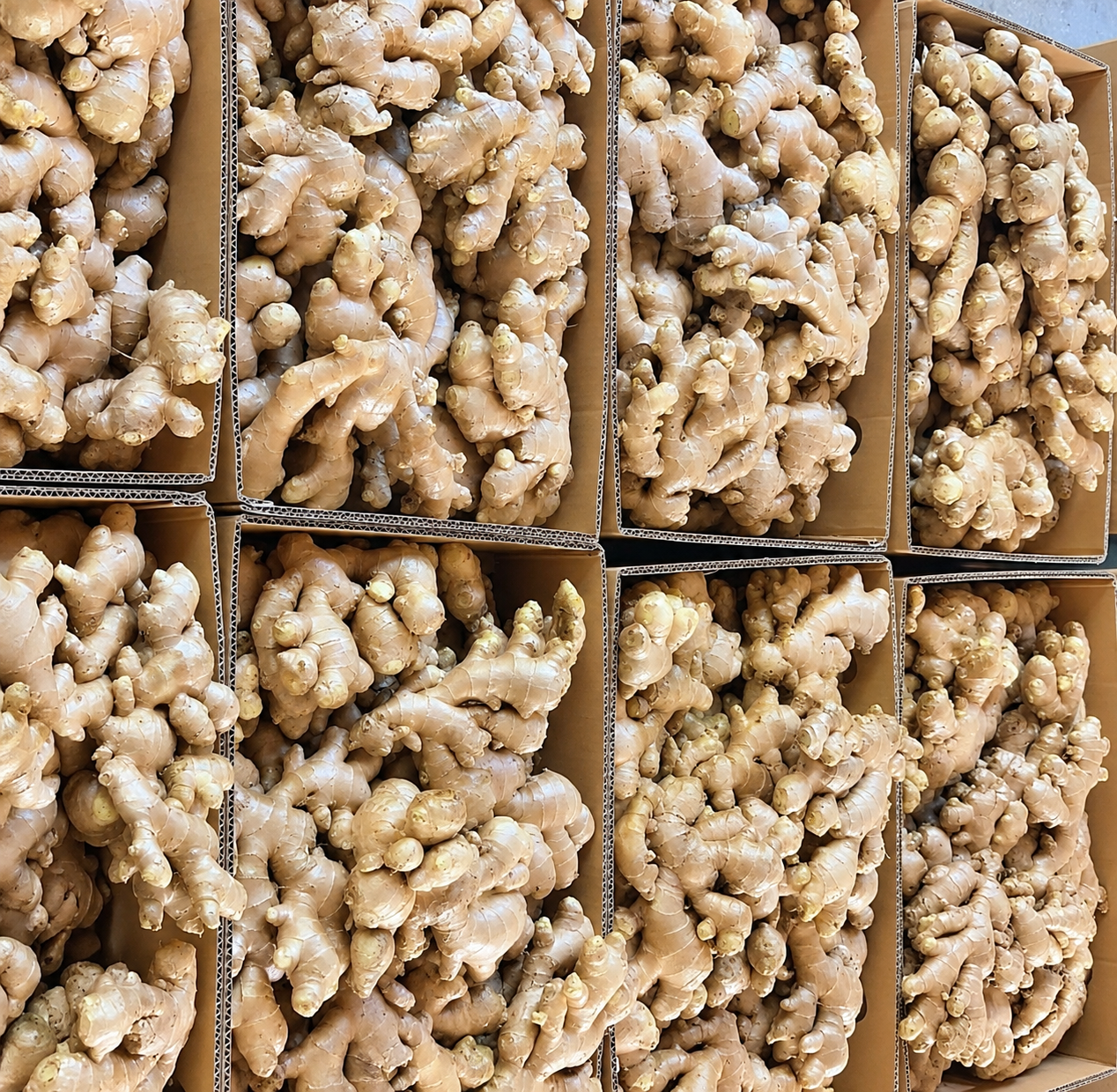
Packaging does more than simply contain the products. It also helps minimize impact and abrasion while supporting air circulation. Depending on the destination market, transportation duration, and buyer requirements, fresh ginger can be packed in specialized cartons or other packaging suitable for the chosen transportation method.
Packaging should meet the following criteria:
-
Durability: Packaging must withstand the weight of the goods, stacking, and loading and unloading operations.
-
Ventilation: It should help prevent moisture accumulation without causing the ginger to dry out excessively.
-
Protection: Avoid excessive empty space that allows the rhizomes to move and collide, while also preventing the goods from being packed too tightly.
-
Hygiene: Packaging must be clean, free from unusual odors, and free from contaminants that could affect the products.
-
Package information: Clearly indicate the weight, specifications, origin, and identification details required by the importing market.
There is no single packaging specification suitable for every order. Importers should agree on the packaging type, weight per package, and loading arrangement when confirming the order.

Common Transportation Methods for Bulk Ginger
| Transportation Method | Suitable When |
|---|---|
| Reefer sea container | Long-distance journeys requiring stable temperature and humidity control |
| Ventilated standard container | Short- or medium-distance journeys under favorable weather conditions |
| Road transportation | Nearby destinations with short transit times |
| Air freight | Small, urgent, high-value shipments |
Important Considerations When Transporting Fresh Ginger by Sea
For large-volume export orders, sea freight generally requires closer monitoring of transit time and container conditions.
Several points should be checked before loading:
-
Container condition: The floor, walls, and ceiling must be clean and dry, with no unusual odors or signs of water leakage.
-
Temperature conditions: If using a reefer container, the set temperature should be agreed upon in advance and monitored throughout the journey.
-
Air circulation: Arrange packages appropriately. Avoid blocking ventilation points or stacking goods directly against the container walls in ways that restrict airflow.
-
Moisture and condensation prevention: Check that the goods and packaging are dry before loading. Prevent rainwater or standing water from coming into contact with the ginger. Read more: Spice Moisture Content for Export from Vietnam: How to Control Moisture from Factory to Port.
-
Cargo securing: Stack and secure packages properly to minimize shifting, collapse, and impact during the voyage.
Transportation conditions should be agreed upon based on transit time, container type, and the storage requirements of each destination market. For long-distance routes, it is advisable to discuss temperature monitoring arrangements and contingency measures in case of incidents in advance.
Shipping terms (FOB, CNF, CIF) also determine who is responsible at each stage of the transportation process. Read more: FOB, CNF, and CIF When Importing Spices from Vietnam.

Looking to Import Fresh Ginger from Vietnam?
Viet Linh Agrimex supports businesses in discussing supply sources, product specifications, and packaging arrangements based on their actual requirements.
Send us the following information to receive consultation and a quotation as soon as possible:
-
Import market: The country and region where your business operates.
-
Destination: The destination port or expected delivery location.
-
Quantity: Required import volume and purchasing schedule.
-
Product requirements: Ginger variety, size, post-harvest condition, and quality standards.
-
Packaging specifications: Packaging type, weight per package, or any specific business requirements.
The more specific the information you provide, the better we can recommend a suitable supply, packaging, and quotation plan.
Contact Viet Linh Agrimex:
-
Phone / WhatsApp / Zalo: +84 345 128 188
-
Email: cskh@vietlinhagrimex.vn